

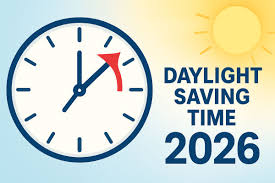
Daylight savings is the practice of moving the clock forward during the spring and backwards during the fall.
This year daylight savings took place on Mar. 8, pushing the clock forward an hour. The opposite will happen on Nov. 1.
Aimed to reduce the amount of energy consumption, daylight savings also disrupts most people’s sleep patterns and schedules.
Some states and US territories do not participate in daylight savings, like Hawaii, Puerto Rico, American Samoa, Guam, the Northern Mariana Islands, the US Virgin Islands, and Arizona with the exception of Navajo Nation.
Effects Of Daylight Savings on Citizens
Most people view daylight savings as just an hour more or less of sleep. For some, it can throw their sleep schedule off while others find there to be little to no difference.
Daylight savings can also throw off the body’s circadian rhythm (the body’s 24hr clock), leading to health risks and safety issues temporarily.
Students especially may find it hard to get back on this rhythm due to unnecessarily early wake up times for school on top of sports practices and/or homework running far too late into the night.
Stella Robinson has said that getting an extra hour of sleep in the fall feels better when it happens but it has a weirder feeling later on, feeling as if you’re going to sleep super early when it’s actually late.
An anonymous student has explained that it can be very difficult to adjust to losing an hour of sleep in the spring. “This is when most classes are highly demanding and require a lot of homework and projects to be done.”
She’s stated that it can already be difficult to try and fall asleep, so the loss of an hour can really make a big impact on sleep schedules.
Many students can find joy in watching the sun set at a later time, using this as an indication that summer is just around the corner.
Where Did Daylight Savings Come From And Where It’s Going
The first adoption of daylight savings came from Germany, its main purpose being energy conservation during World War 1 to save fuel for the war.
This concept was then shifted to simply maximize daylight hours by the US in 1918.
Today it is still in effect with the same concept the US had originated it with; to make the most of natural daylight but to also save energy.
Having more light later in the day can encourage people to refrain from using their house electricity due to the natural light coming from the sun. This is how daylight savings can conserve energy.