There are many benefits to physical and digital media. In present times, most people now use streaming platforms like Spotify, Apple Music, Youtube Music, and Amazon Music.
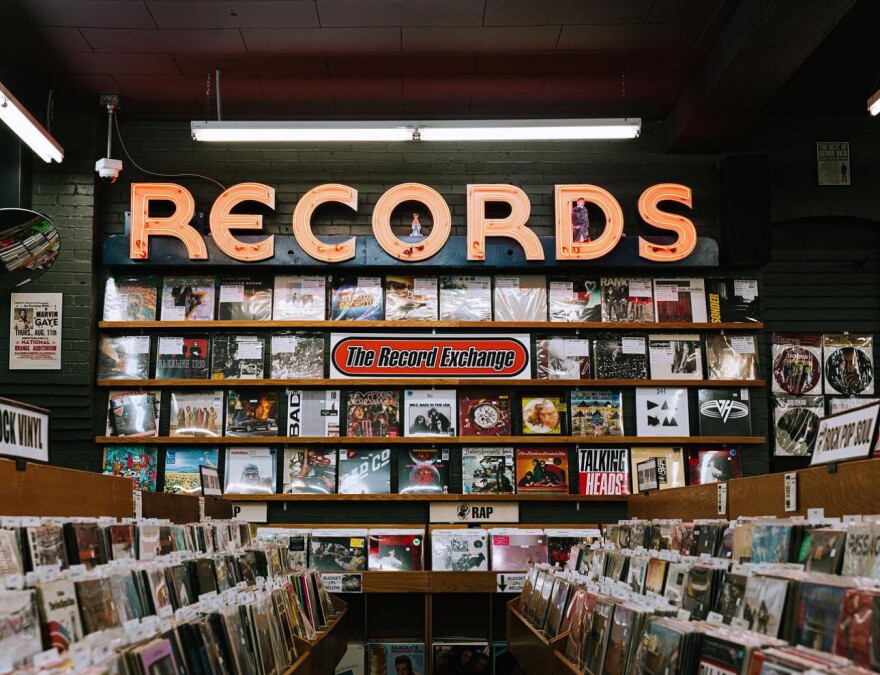
In the 1970’s-90’s, the main way of listening to music was vinyl records and 8-tracks, cassette tapes, and compact discs (CDs).
One of the reasons why people may enjoy physical media more is due to the fact that you have more ownership over a CD or vinyl than you do an unlimited streaming service.
Physical media also generally offers better quality than digital media does. This is due to higher bitrates (the number of bits per second, transmitted along a digital network), uncompressed audio, and lossless sound.
While physical media is nice for collectors and those who prioritize ownership and quality, it can be quite expensive to grow a collection today.
For example, vinyls usually cost around $20-$40 and cassette tapes and CDs for $10-$20. Back in the 80’s, vinyls were only $7-$10.
Back then, CDs were considered more high-end, so they were priced at around $15 and $20 per album.
However, you can find things like these for fractions of the price at local thrift stores.
Digital media costs much less, most streaming platforms offer a free, ad supported tier to people to listen to music. However, you have to have internet access in order to listen.
Physical media can be listened to anywhere at any time because it doesn’t require an internet connection.
Stella Robinson says that digital media can still be downloaded, which allows you to listen to it without internet access, making this “less of a con” to digital media.
Is Physical Media Making A Comeback?
Over the past 3 years, physical media has been experiencing a Gen-Z driven resurgence. Vinyl sales have increased by 14% with growing interest in CDs also. It’s not just music, it’s books and even 4K Blu-rays as well.
Some Gen-Z are experiencing something called digital fatigue. Which can be defined as a desire to disconnect from endless scrolling and the ephemeral nature of streaming.
Gen-Z is enjoying physical media as a counter to digital overload, seeking a tangible connection, ownership, better quality, and valuing the authenticity and nostalgic feel of it even if they didn’t really grow up with it, creating a unique connection.
However Sophie Dorval believes that digital media is much “more convenient to people” to access in order to listen to music.
The History Of Physical Media
Physical media dates all the way back to the late 1800’s when Thomas Edison’s invention first recorded and played sound on a wax cylinder. This marks the start of recorded audio.