


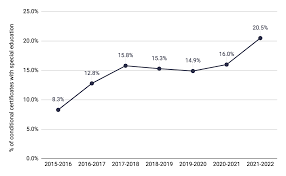
Teacher shortages across Washington state are no longer a temporary inconvenience, they’re reshaping what students learn, which classes schools can offer, and who gets access to meaningful opportunities. As districts struggle to fill vacancies, students in less‑resourced communities are feeling the impact most sharply, creating widening gaps in education quality.
A Growing Crisis in Washington Classrooms
Across the state, districts are reporting unfilled positions in core subjects like math, science, and special education. Many schools are relying on long‑term substitutes or teachers working outside their certification areas. For students, this means inconsistent instruction and fewer chances to take the classes they need.
“My chemistry class had three different subs in one month,” said Bella Raina, a 12th grader. “We barely did labs because no one was certified to run them.”
For students hoping to pursue STEM majors, missing foundational instruction can have long‑term consequences.
Electives and Advanced Courses Disappearing
The shortages don’t just affect core subjects; they’re reshaping entire schedules. Some schools have cut electives, AP classes, and CTE programs simply because they can’t find qualified staff.
“I wanted to take AP Computer Science, but the school canceled it,” said Ava Remmington, a sophomore. “It feels like students in bigger districts get way more opportunities.”
Meanwhile, better‑funded districts continue to offer full course catalogs, widening the opportunity gap between communities.
Counselors Struggle to Keep Students on Track
School counselors say the shortages make scheduling increasingly difficult. When a teacher leaves mid‑year, entire grade levels may need to be reshuffled.
“We’re trying to keep students on track for graduation, but when classes collapse or get merged, it creates chaos,” said one counselor who asked to remain anonymous.
Larger class sizes also mean less individual support, especially for students who need extra help.
Teachers Feeling the Pressure
With fewer staff members, existing teachers take on additional duties, cover classes during their planning periods, or manage over-sized classrooms. Many say the workload is unsustainable.
“When I’m covering someone else’s class, I lose the time I need to plan for my own students,” said a teacher at a nearby district. “It’s a cycle that burns people out.”
This burnout contributes to even more turnover and more vacancies.
Parents Worry About Long‑Term Impact
Parents are increasingly concerned about the stability of their children’s education. Some worry that inconsistent instruction will leave students unprepared for college or careers.
Others worry that schools in wealthier areas will continue to pull ahead, leaving their own communities behind.
Students Want Change Not Excuses
Despite the challenges, students remain hopeful that raising awareness will push districts and lawmakers to address the issue.
As Washington continues to face staffing shortages, the divide between schools with resources and those without is becoming harder to ignore. The question now is whether the state and local communities will take action before the gap grows even wider.